
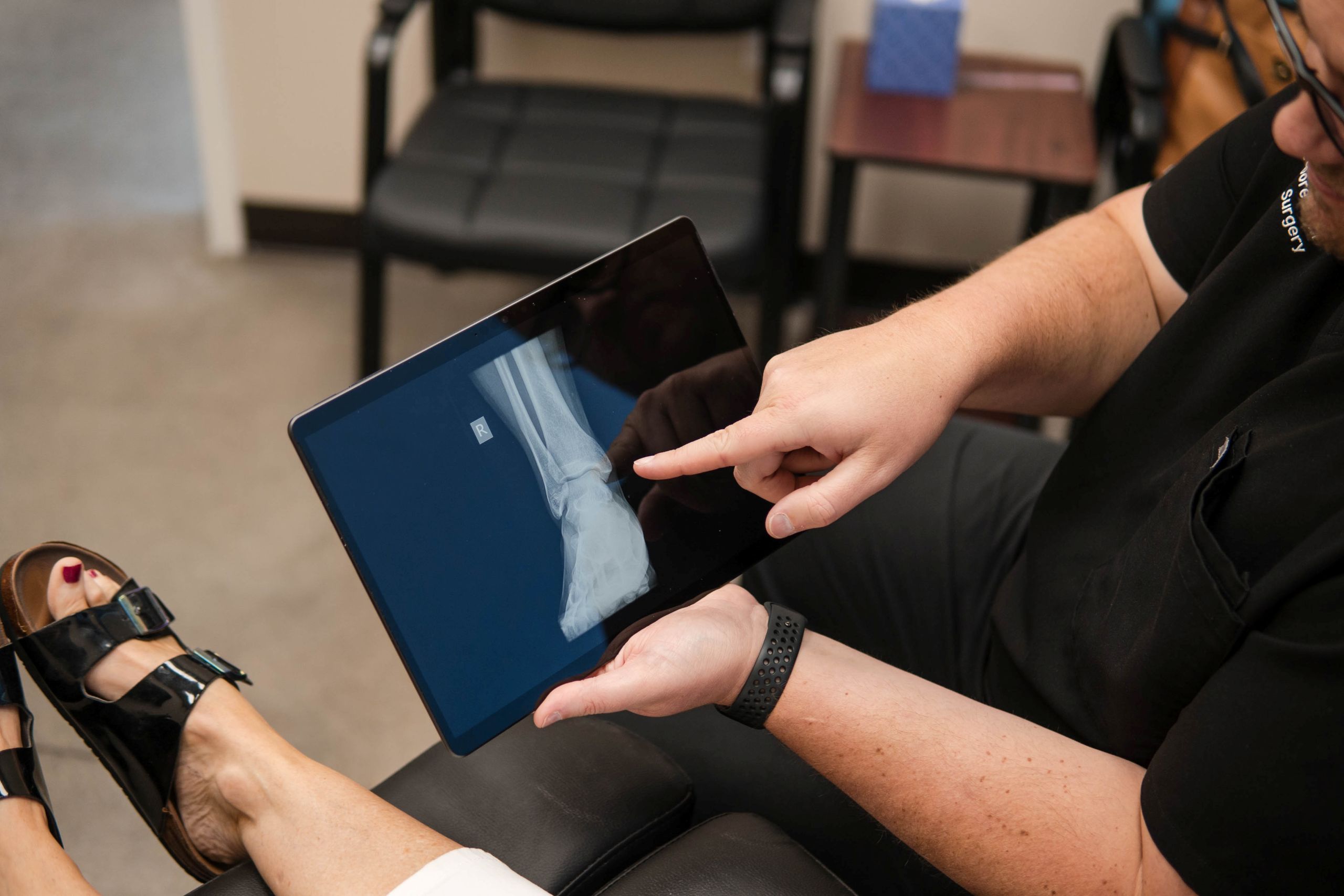
Bunions are one of the most common foot conditions we see at Central Arkansas Foot and Ankle Specialists, yet they’re also one of the most misunderstood. Many people assume bunions are simply cosmetic or something they have to live with forever. In reality, bunions are a progressive structural issue that can worsen over time if left unaddressed.
Understanding when to monitor a bunion and when it’s time to seek treatment can help you avoid unnecessary pain, mobility issues, and long-term foot damage. Early awareness plays a critical role in protecting your foot health and maintaining your quality of life.
What Is a Bunion?
A bunion, medically known as hallux valgus, forms when the big toe gradually shifts inward toward the smaller toes. This movement forces the joint at the base of the big toe to protrude outward, creating a visible bump along the side of the foot. Over time, the joint becomes misaligned, inflamed, and painful.
Bunions are not caused by a single factor. Genetics often play a significant role, especially if you inherit foot structures that place extra stress on the big toe joint. Poor footwear, repetitive pressure, flat feet, and abnormal gait patterns can accelerate the development of bunions and increase symptoms.
Early Signs That a Bunion Is Developing
Bunions don’t appear overnight. They develop slowly, often beginning with subtle symptoms that are easy to ignore. Early signs may include soreness around the big toe joint, mild swelling, or redness after long periods of standing or walking.
Some patients notice their shoes becoming tighter across the forefoot or feel discomfort when wearing narrow footwear. Others experience stiffness in the big toe, making it harder to push off while walking. These early warning signs indicate that structural changes are already underway.
When It’s Okay to Watch and Monitor
Not all bunions require immediate medical intervention. If your bunion is small and symptoms are mild or occasional, conservative care may be enough to manage discomfort and slow progression.
Monitoring may be appropriate if pain is minimal, swelling is infrequent, and daily activities are not affected. Supportive shoes with a wide toe box, avoiding tight footwear, and using padding to reduce friction can help relieve pressure on the joint.
Custom orthotics or supportive inserts can also help correct underlying biomechanical issues, reducing strain on the big toe joint and preventing further misalignment. Regular check-ins with a foot specialist allow us to track changes and adjust your care plan as needed.
Signs It’s Time to Treat a Bunion
Bunions should not be ignored when symptoms begin to interfere with daily life. Persistent pain, frequent inflammation, or difficulty wearing shoes are strong indicators that treatment is needed.
If your bunion causes ongoing discomfort, limits your mobility, or leads to secondary issues such as hammertoes, calluses, or overlapping toes, it’s time for professional evaluation. Worsening misalignment can affect your balance and place added stress on your ankles, knees, hips, and lower back.
Chronic bunion pain that disrupts sleep, work, or physical activity is another clear sign that intervention is necessary. Waiting too long can make treatment more complex and recovery longer.
Treatment Options for Bunions
Treatment depends on the severity of the bunion and how much it affects your quality of life. Conservative treatments are often the first step and may include custom orthotics, footwear recommendations, activity modifications, and anti-inflammatory strategies.
These approaches aim to reduce pain, improve alignment, and slow progression. While they cannot reverse a bunion, they can significantly improve comfort and function.
In more advanced cases, surgical correction may be recommended. Bunion surgery addresses the underlying structural problem by realigning the joint and restoring proper foot mechanics. Modern techniques are far more precise than in the past, with many patients experiencing excellent outcomes and long-term relief.
Why Early Care Matters
Ignoring bunions allows the condition to progress, often leading to increased pain and more complex foot problems. Early intervention can prevent complications, preserve joint function, and reduce the likelihood of needing surgery later.
Addressing bunions early also helps protect your overall foot health. Proper alignment improves balance, reduces strain on surrounding joints, and supports long-term mobility.
Get Expert Guidance for Your Foot Health
Bunions are not just a cosmetic concern, they are a medical condition that deserves proper evaluation and care. At Central Arkansas Foot and Ankle Specialists, we take a personalized approach to bunion treatment, focusing on both symptom relief and long-term foot function.
If you’re experiencing bunion pain or noticing changes in your big toe alignment, schedule an appointment with our team. We’ll assess your condition, discuss your options, and help you decide when to watch and when to treat, so you can stay active, comfortable, and confident on your feet.